

10, 20, or 30 seconds? A recording guide for Bangla voice cloning
Record a clean voice sample and compare sample lengths without confusing length, room noise, and speaking style.
In this guide
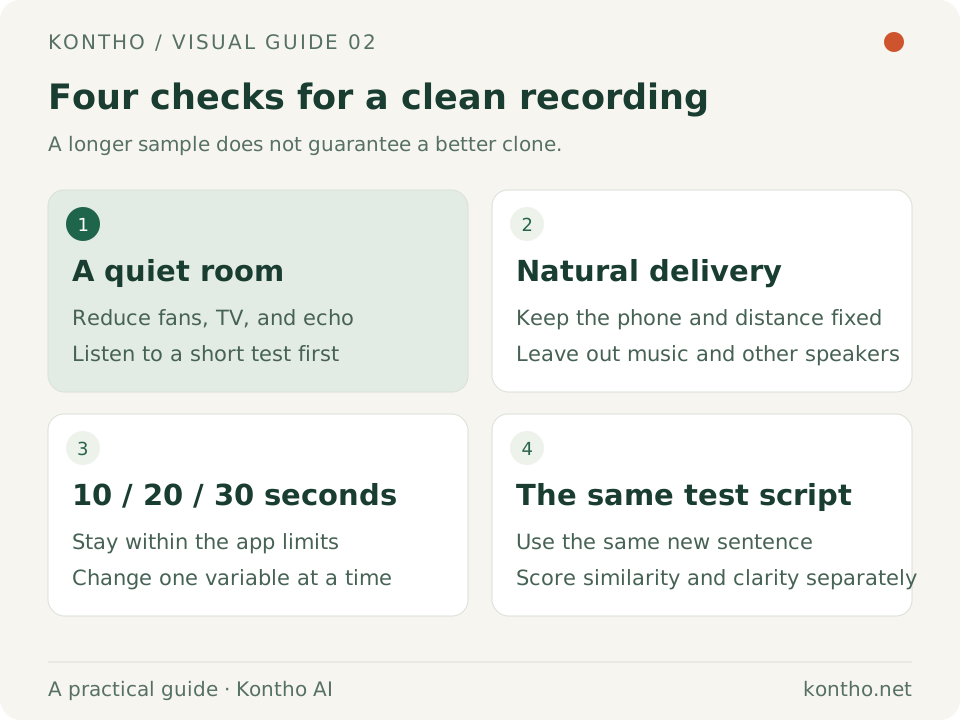
A longer voice sample does not guarantee a better clone. Clean speech, natural delivery, and low echo matter. Kontho's practical guidance is to speak naturally for about 20 seconds within the limits shown by the app. This is a recording and testing guide, not a claim that a controlled study has established a winning length.
Prepare a clean phone recording
Choose a quiet room away from television, traffic, and strong fan noise. Keep the phone steady. Speaking extremely close to the microphone can introduce breath noise. Record a short test and listen with headphones before creating a clone.
Describe your day or your work in your normal voice. Avoid music, other speakers, whispered delivery, exaggerated acting, or processed audio. Your sample can use your own words; the consent recording must follow the displayed sentence.
Compare lengths fairly
- Record 10-, 20-, and 30-second samples in the same room with the same phone and distance, within the app's accepted limits.
- Keep delivery comparable so length is the main variable.
- Generate the same new script with every clone.
- Ask listeners to score similarity, intelligibility, and naturalness separately.
- Record settings and mistakes. One speaker's result does not establish a universal rule.
Change noisy recording conditions before assuming the sample is too short. Test room echo and microphone distance separately from length.
Sample versus consent
The sample supplies voice characteristics. The spoken consent verifies permission, and both recordings must come from the same owner. Do not use another person's sample with your own consent recording.
Read the retention conditions before cloning: Kontho requires permission to retain these recordings, including after voice or account deletion. Follow the cloning steps, or use the troubleshooting guide if the attempt is refused.